The most mathematically flawed decision you can make in a bull market is successfully taking profits and then doing absolutely nothing with them.
If you just rotated out of a massive Solana token launch and are letting thousands of Tether (USDT) sit completely idle in your wallet, you are bleeding purchasing power. Real inflation is not zero, and holding static cash is a guaranteed loss. The wealthy do not hold static cash; they deploy it into infrastructure that pays them rent.
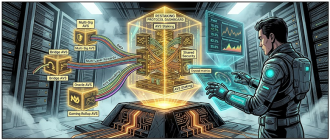
This is the entire premise of stablecoin yield farming. You take assets pegged to the US Dollar and lock them into decentralized financial (DeFi) protocols to earn a passive, highly predictable yield. In traditional finance, a savings account pays you 3-5% while the bank lends your money out at 15%. In Web3, you eliminate the bank and collect the 15% yourself. Here is how you safely deploy your cash reserves in 2026 without exposing your capital to market crashes.
Where Does the Yield Come From?
When traditional investors hear about «15% APY on US Dollars,» their immediate reaction is that it must be a Ponzi scheme. It is not. You simply need to understand the source of the yield.
In crypto, you are being paid a premium because you are acting as the liquidity provider for the most aggressive speculators on the planet.
- The Degens: A trader wants to open a highly leveraged Long position on a new altcoin. They do not want to sell their Ethereum, so they use it as collateral to borrow stablecoins.
- The Bank (You): You deposit your USDC or USDT into lending protocols like Aave, Kamino, or Marginfi. The protocol takes your dollars and lends them to the trader. The trader pays a 15% borrowing interest rate, and the smart contract automatically routes that interest directly into your wallet.
You are selling shovels during a gold rush. You take zero directional risk on the price of Bitcoin; you simply collect the tax from those who do.
The Big Three: Strategies for 2026
Stablecoin yield farming has matured significantly. Here are the three most robust frameworks for generating yield right now.
1. Over-Collateralized Lending (The Safest Route)
Protocols like Aave (Ethereum/Base) or Marginfi (Solana) are the bedrock of DeFi. You deposit your stablecoins, and borrowers take them.
- The Safety Net: Borrowers must deposit more value than they borrow. If they borrow $1,000 of your USDC, they must lock up $1,500 worth of ETH. If the market crashes and their ETH value drops to $1,050, the smart contract mercilessly liquidates their ETH, converts it back to USDC, and returns your money. The system is designed to protect the lender at all costs.
2. Stable-to-Stable Liquidity Pools (DEX Farming)
Decentralized Exchanges (DEXs) like Curve Finance or Raydium need deep pools of stablecoins so users can swap USDT for USDC without slippage. By depositing an equal 50/50 split of USDC and USDT into a liquidity pool, you earn a percentage of every single trading fee generated by the platform. Because both assets are pegged to $1, you suffer practically zero «Impermanent Loss.»
3. RWA Integrations (Real World Assets)
As we covered in our RWA analysis, protocols are now tokenizing US Treasury Bills. Platforms like Ondo Finance allow you to deposit your stablecoins, which the protocol then uses to buy short-term US government debt. The protocol passes the 5% risk-free US Treasury yield directly to your crypto wallet. This provides an absolute, institutional-grade floor for your yield strategy.
The Threat Vectors: De-Pegging and Smart Contracts
«Safe» in crypto means 99% safe. It never means 100%. The two things that can destroy a stablecoin portfolio are De-pegging and Smart Contract exploits.
- The De-Peg Risk: In 2022, the algorithmic stablecoin UST collapsed to zero in a matter of days. In 2023, even USDC briefly dropped to $0.87 during the Silicon Valley Bank crisis. Never hold 100% of your fiat value in one stablecoin. Split your war chest between centralized, fully audited stablecoins (USDC), highly liquid market leaders (USDT), and battle-tested over-collateralized decentralized stables (like DAI).
- Smart Contract Risk: If you chase a 40% APY on a brand-new, anonymous lending protocol, you will eventually be hacked. Stick to protocols that have over $1 Billion in Total Value Locked (TVL) and have survived multiple bear markets without being exploited.
Conclusion: Compounding Your Dry Powder
The ultimate goal of stablecoin yield farming is to weaponize your patience.
When you dynamically DCA out of the market and build a massive cash reserve, that money should immediately go to work. Earning 10% on a $50,000 stablecoin portfolio generates an extra $5,000 a year—pure profit that you can systematically use to buy more Bitcoin when the market inevitably crashes. You are no longer waiting for the market to give you opportunities; you are mathematically generating your own.