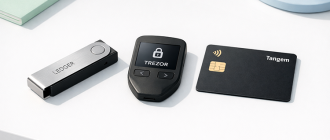
At some point every crypto user asks the same question:
Do I really need a hardware wallet, or is this just another security accessory people talk about online?
Hardware wallets are often presented as a mandatory upgrade — the “next step” in becoming a serious crypto investor. But the truth is more nuanced. For some people, a hardware wallet is essential. For others, it adds cost and complexity without significantly improving their real security.
Understanding when you actually need a hardware wallet — and when you do not — can save you both money and unnecessary stress.
What a Hardware Wallet Actually Does
A hardware wallet is not magic.
It does not make you immune to scams, phishing or bad decisions.
What it does is simple: it keeps your private keys offline.
Your keys never touch your computer, browser or phone. Transactions are signed inside a physical device, which significantly reduces the risk of malware-based theft.
This is extremely useful — but only if your risk profile actually requires that level of isolation.
When You Do Need a Hardware Wallet
You almost certainly need a hardware wallet if:
You hold a meaningful amount of crypto that would seriously affect your finances if lost.
You plan to hold assets long term rather than trade actively.
You interact with multiple DeFi protocols and sign many contracts.
You manage more than one wallet or help manage funds for others.
You want full custody without relying on exchanges.
In these situations, the hardware wallet becomes your personal security perimeter. It dramatically lowers the chance that a single phishing link or infected extension wipes out your holdings.
When You Probably Don’t Need One
A hardware wallet may be unnecessary if:
You are holding only small amounts that you actively trade.
Your funds mostly stay on a reputable centralized exchange.
You rarely interact with smart contracts.
You are still learning and experimenting with crypto.
In these cases, a simple software wallet with good operational habits may provide a similar practical security level — without added complexity.
The Real Risks People Misunderstand
Many people buy hardware wallets but still lose funds because they:
Store seed phrases digitally.
Sign unknown contracts blindly.
Connect their main wallet to experimental platforms.
Ignore transaction approvals.
A hardware wallet protects your keys — not your behavior.
Operational discipline matters more than any device.
A Balanced Security Model
For most regular users, the smartest setup is layered:
One main cold wallet (hardware) for long-term holdings.
One hot wallet (software) for daily activity, DeFi and experiments.
This creates separation between savings and operations — which is often more important than absolute security.
Final Thoughts
So, do I need a hardware wallet?
If crypto is becoming a serious part of your financial life, the answer is usually yes.
If you are just starting out or actively trading small amounts, it can wait.
Hardware wallets are not about looking professional.
They are about reducing the probability of catastrophic mistakes.
And in crypto, reducing catastrophic mistakes is what really protects your capital.