
Understanding why crypto traders fail requires looking at their code, not their mindset. You can have the discipline of a monk, but if your system is mathematically flawed, you will go to zero.
Most traders build a strategy, backtest it, see a 500% gain in 2024, and think they have solved the market. They launch it with real money, and it instantly starts losing.
This is not bad luck. It is bad science.
Here are the three structural reasons why 90% of strategies are destined to collapse on Investors Planet.
1. The Trap of Overfitting (Curve Fitting)
This is the #1 killer of algorithmic traders.
- The Mistake: You tweak your indicators (RSI length, MACD settings) until they perfectly predict the past price action. You make the strategy fit the history like a tailored suit.
- The Reality: The past is static; the future is chaotic. A strategy that is “fitted” too tightly to historical noise will fail the moment the market pattern changes slightly.
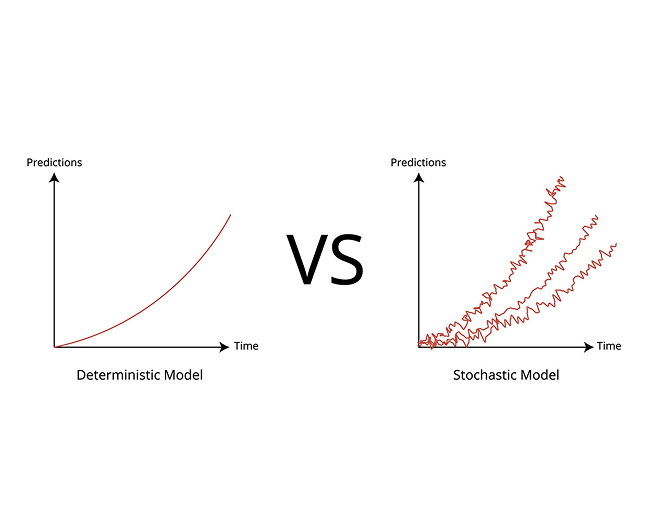
- The Signal: If your backtest looks like a smooth straight line up, it is fake. Real strategies have drawdowns. If it looks too perfect, it is overfitted.
2. Market Regime Change
Strategies are usually specialists, not generalists.
- Trend-Following Bot: Prints money in a Bull Market (2021).
- Mean-Reversion Bot: Prints money in a Crab Market (2022).
The Failure: The market constantly switches “Regimes” (from Trending to Ranging). A trader fails because they run a Bull Market strategy in a Bear Market. They don’t realize the regime has changed until they have lost 50% of their capital.
- The Fix: You don’t need one strategy. You need a portfolio of strategies that hedge each other (one for uptrend, one for chop).
3. Alpha Decay (The Copycat Effect)
In crypto, “Alpha” (your edge) has a half-life.
- The Mechanism: If you find a profitable inefficiency (e.g., an arbitrage between two exchanges), eventually other traders find it too.
- The Result: As more capital chases the same trade, the profit margin shrinks to zero. The market becomes “efficient.”
- The Lesson: A strategy that worked in 2024 will likely be useless in 2026. You must constantly innovate. You cannot “set and forget.”
4. Liquidity Constraints (Scalability)
A strategy that turns $1,000 into $2,000 might fail to turn $1M into $2M.
- Slippage: With small money, you can enter and exit instantly. With big money, your own buy orders push the price up, and your sell orders crash the price.
- The Wall: Many traders fail after they succeed. They scale up their position size, and suddenly their slippage eats all their profits.
Summary: Adapt or Die
The market is a biological organism that evolves to kill your strategy.
To stop being part of the statistic of why crypto traders fail, you must treat trading like R&D (Research & Development). Your current strategy is temporary. Your job is not to trade; your job is to find the next strategy before the current one decays.