As cryptocurrency adoption grows, wallets have become the main gateway to storing, sending, and managing digital assets. Many people assume that crypto wallets are either completely safe or inherently risky, but the reality lies somewhere in between.
Crypto wallets are secure when used correctly. The real challenge is not the technology itself, but how users manage private keys, access, and daily security habits. Understanding a simple, reliable setup can dramatically reduce the risk of losing funds.
What Makes Crypto Wallets Secure?
At the core of every crypto wallet are private keys. These cryptographic keys prove ownership of funds and authorize transactions on the blockchain. If someone gains access to your private keys, they effectively control your assets.
Wallet security relies on strong cryptography, blockchain verification, and user-controlled access. Unlike traditional banks, there is no central authority that can reset a wallet or recover funds if access is lost. This makes proper security practices essential rather than optional.
Types of Crypto Wallets
Not all wallets offer the same balance between convenience and security. Understanding the differences helps users choose the right setup.
- Hot Wallets
Hot wallets are connected to the internet and usually come in the form of mobile apps, browser extensions, or exchange accounts. They are easy to use and suitable for frequent transactions, but constant connectivity increases exposure to online threats such as phishing and malware.
- Cold Wallets
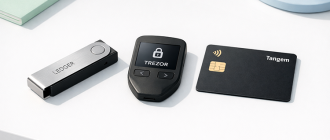
Cold wallets store private keys offline, typically through hardware devices or paper backups. Because they are not connected to the internet, they are significantly harder to compromise. While less convenient for daily use, cold wallets are widely considered the safest option for long-term storage.
Custodial vs Non-Custodial Wallets
Another key distinction in crypto wallet security is who controls the private keys.
Custodial wallets are managed by third parties, usually exchanges. They are easier for beginners but require trusting an external provider. Non-custodial wallets give users full control over their keys, offering greater independence and security, but also full responsibility.
For most users, combining both types strategically can provide a practical balance.
Can Crypto Wallets Be Hacked?
Crypto wallets themselves are rarely “hacked” in the traditional sense. Most security incidents occur because attackers exploit human behavior rather than breaking cryptography.
Common risks include phishing attacks that trick users into revealing keys, malware installed on compromised devices, SIM-swapping attacks that bypass two-factor authentication, and weak or reused passwords.
Understanding these risks is the first step toward preventing them.
Security Features That Matter
Modern wallets include multiple built-in protections, but they only work when properly used.
Two-factor authentication adds an extra layer during login and transactions. Biometric authentication helps prevent unauthorized access on physical devices. Seed phrases and recovery keys allow wallet restoration if a device is lost. Hardware encryption and multi-signature setups further reduce single points of failure.
Technology provides tools, but discipline determines outcomes.
The Only Setup Most People Need
For the majority of users, crypto wallet security does not require complex systems.
A simple and effective setup includes using a hardware wallet for long-term holdings, keeping a small amount in a hot wallet for daily use, storing seed phrases offline in multiple secure locations, and enabling two-factor authentication wherever possible.
Separating funds by purpose and minimizing exposure dramatically lowers overall risk.
Daily Habits That Keep Wallets Safe
Even the best wallet cannot protect against unsafe behavior. Regular software updates, avoiding public Wi-Fi for transactions, verifying links before connecting wallets, and maintaining strong passwords are essential habits.
Most losses are preventable with consistency rather than advanced technical knowledge.
The Bottom Line
Crypto wallet security is less about complexity and more about discipline. Blockchain technology offers strong protection, but user decisions determine the final outcome.
By following a simple, well-structured setup and maintaining good security habits, most people can protect their assets effectively without unnecessary stress.
FAQs (под Schema / Rank Math)
Are crypto wallets safe for beginners?
Yes. Beginners can safely use crypto wallets by starting with simple interfaces and following basic security practices.
Can stolen crypto be recovered?
In most cases, stolen crypto cannot be recovered. Prevention is the most effective protection.
Do I need multiple wallets for security?
Using more than one wallet can reduce risk, but it is not required for everyone.