
Investment Strategies & Market Insights
Investment Strategies & Market Insights covers a wide range of approaches to building and managing capital across global financial markets.
This section focuses on long-term investing principles, portfolio management, risk analysis, macroeconomic trends, and asset allocation – with a strong emphasis on cryptocurrency as a new and rapidly evolving asset class.
Here you’ll find practical insights that help investors navigate traditional markets, digital assets, and emerging opportunities with a clear, disciplined mindset.

A crypto exit strategy is the most neglected part of any investment plan. Most people spend hundreds of hours researching which “moonshot” to buy, but

Mastering crypto portfolio diversification is the only way to survive the violent volatility of digital assets. Everyone looks like a financial genius during a bull

Overcoming investment bias crypto traps is the hardest skill to master in financial markets. You can learn technical analysis in a month and tokenomics in

Understanding why crypto traders fail requires looking at their code, not their mindset. You can have the discipline of a monk, but if your system

The debate of time in the market crypto strategies versus active trading is the oldest battle in finance. In the adrenaline-fueled world of blockchain, the

In a bull market, everyone feels like a genius. But when the cycle ends, most retail investors look at their balances and realize they barely

token supply explained for regular investors Most beginners look at price. Smarter investors look at market cap. Experienced investors look at supply. If you don’t

crypto risk management basics explained simply Ask ten beginners what matters most in crypto and you’ll hear the same answers: finding the next 10x, buying

If you’ve spent even a few months in crypto, you’ve probably noticed something strange. The same coin can be called: a “long-term investment” by one
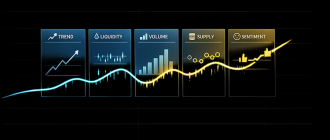
Most people in crypto think they lose money because they “picked the wrong coin”. That’s comforting.Because it means the problem is external. But if you