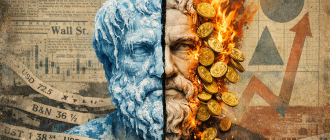
Mastering the buy the rumor sell the news crypto strategy is the difference between being the player and being the casino.
Every new investor has experienced this exact scenario: You follow a project on Twitter. They announce a massive “Mainnet Launch” happening on Friday. You buy the token on Thursday, expecting the price to explode when the network goes live. Friday arrives, the launch is successful, the technology works perfectly—and the token price instantly crashes 30%.
You feel cheated. You think the market is manipulated.
It is not manipulated; it is just perfectly efficient. On Investors Planet, we teach you to stop trading the past and start trading the future. Here is the exact mechanical breakdown of why official news destroys portfolios, and how to trade the timeline.
The Concept of “Priced In”
Financial markets are forward-looking mechanisms. They do not price an asset based on what it is worth today; they price it based on what it will be worth in six months.
If there is a 90% chance that a project will announce a partnership with Google next month, the “Smart Money” (insiders, funds, whales) buys the token today. As they buy, the price rises. By the time the actual partnership is officially announced, the value of that partnership is already reflected in the current high price. It is “priced in.”
This creates a brutal three-phase cycle.
Phase 1: The Whisper (Accumulation)
This happens weeks or months before the event.
- The Signal: A developer posts a cryptic tweet. Someone notices a new code commit on GitHub. A wallet associated with a major Venture Capital fund starts quietly buying the token on decentralized exchanges.
- The Action: Smart money buys aggressively but slowly, hiding their volume. The price starts a steady, quiet upward trend. There are no headlines.
Phase 2: The Echo Chamber (The Markup)
The rumor leaks from the shadows to the influencers.
- The Signal: Crypto Twitter and YouTube catch the narrative. Influencers start posting threads: “Why $COIN will 10x when Mainnet launches next week.” * The Action: “Smart Retail” investors enter the market. The volume spikes. The price goes parabolic, rising 10% to 20% a day. FOMO (Fear Of Missing Out) takes over the market.
Phase 3: The Megaphone (The Distribution)
The official day arrives. The news is published on mainstream crypto media sites.
- The Action: The “Dumb Retail” investors—the people who only buy when they see a headline—rush in to buy the token, expecting a massive pump.
- The Trap: The Smart Money from Phase 1 has been holding massive bags with 300% profit. They need “Exit Liquidity” (buyers) to cash out. The massive wave of retail buyers rushing in on launch day provides the exact liquidity the whales need to dump millions of dollars’ worth of tokens without crashing the price to zero instantly.
Once the whales finish selling, the buying pressure stops, and the price collapses. The news was the exit door.
The Playbook: How to Trade the Cycle
To survive and profit from this dynamic, you must adopt strict, emotionless rules.
- Never Buy the Headline: If you read about a major positive event on a news website today, you are already two weeks late. Do not buy. You are stepping in to be someone else’s exit liquidity.
- Sell 24 Hours Before the Event: If you were smart enough to buy the rumor early, do not get greedy. Sell 80% to 100% of your position the day before the scheduled announcement or launch. Leave the last 20% of profit for the gamblers.
- Buy the Post-News Blood: Sometimes, the fundamental news is actually incredible (like the Bitcoin Spot ETF approval). The price will still crash on the day of the news because short-term traders are taking profits. Wait for the dust to settle, let the weak hands sell, and buy the dip a few weeks later when the real fundamental growth begins.
Summary: Trade the Anticipation
The buy the rumor sell the news crypto dynamic teaches us a harsh truth: markets reward anticipation, not reaction.
The excitement leading up to an event is always more valuable than the event itself. Your job is not to wait for confirmation; your job is to find the whispers, ride the anticipation, and exit the building right as the crowd rushes through the front door.